10K Followers and You Own Nothing: Do You Need a Website?
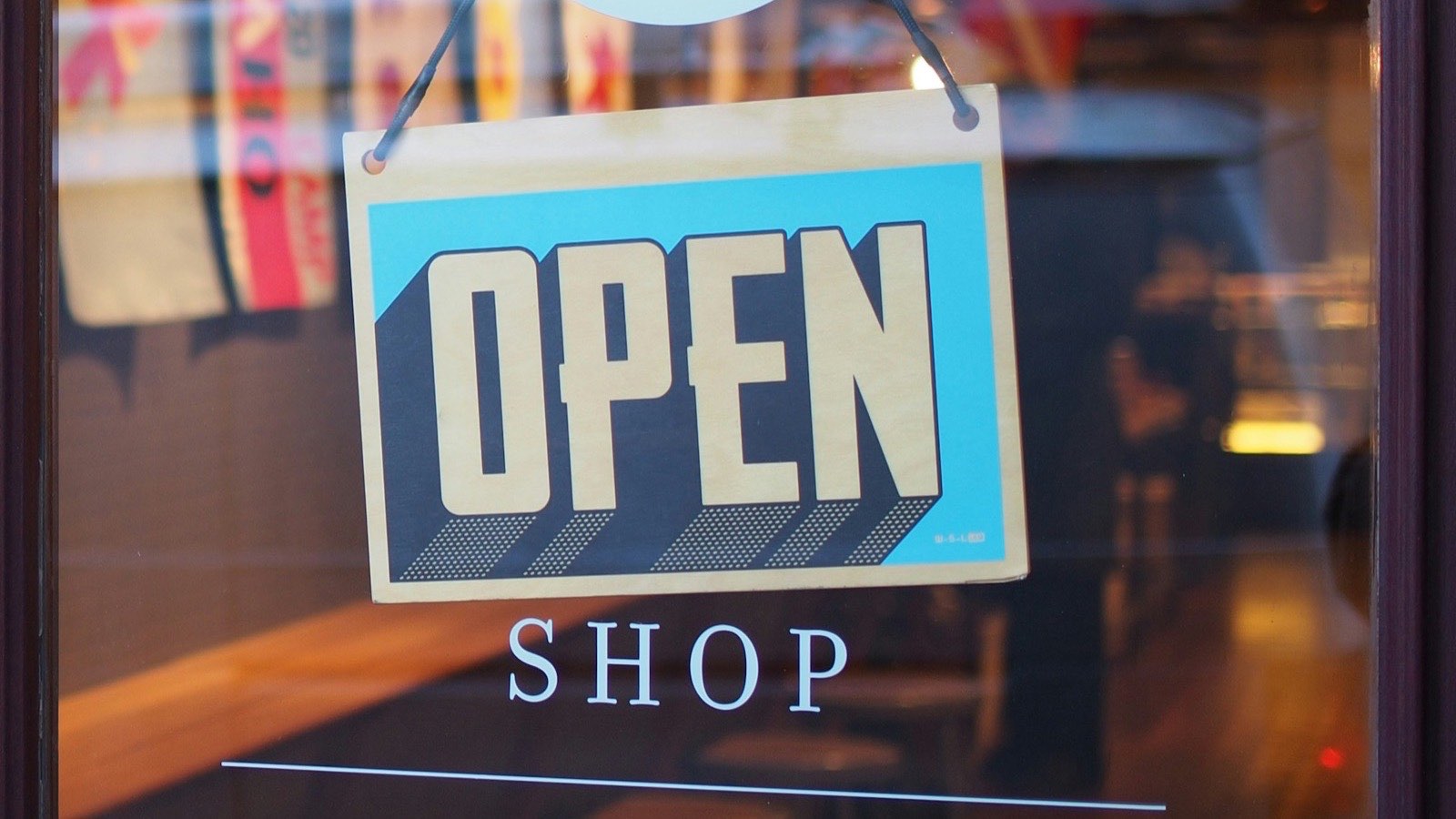 Image borrowed from unsplash.com.
The question comes in almost the same words every time. "I've got 10,000 followers on Instagram and they buy from me. Why would I pay for a website?"
It's a fair question and the usual answers are bad. "Every business needs a website" is not an argument. "It looks more professional" is barely one.
There is a real answer, and it isn't about looking professional. It's about the difference between owning something and renting it. Once you see the difference, the rest of the decision makes itself.
I build websites for a living, so one of these answers pays me. You should know that before you read another line.
Which is why I've stuck to things you can check, and why I've thrown out three statistics that would have helped my case. Every figure below is linked to its source. Where the source is weak, I say so.
The difference nobody explains
Your Instagram account is not yours. Neither is your Facebook page, your TikTok profile or your WhatsApp Business number.
You have an account on a service, and you keep it as long as the company allows. That isn't a conspiracy theory. It's the arrangement you agreed to, and it's completely normal. You rent an office the same way.
The difference is that the landlord of an office has to give you notice, and a court has to be involved if things go wrong. On a platform, the eviction is instant, automated, and there's usually nobody to call.
So the question isn't "website or social media". It's "what happens to my business on the day the account stops working". Everything below is an attempt to answer that with numbers.
What your followers are actually worth
Start with the thing that gets sold to business owners hardest: the follower count.
A follower is a permission for the platform to show your post to that person. It is not a promise. And the platforms have spent twelve years reducing how often they act on it.
In March 2014, Social@Ogilvy published an analysis of more than 100 brand pages with about 48 million fans between them. Average organic reach fell from 12.05% in October 2013 to 6.15% in February 2014, a decline of 49% in five months. Pages with more than 500,000 likes were down to 2%.
That November, Facebook told Pages directly that posts pushing people to buy something would see organic distribution fall significantly. In January 2018, Adam Mosseri put it in one sentence on Meta's own newsroom: "As we make these updates, Pages may see their reach, video watch time and referral traffic decrease."
Where it has landed: Socialinsider's benchmark study, built on 25 million posts from 130,683 Facebook business pages between January 2024 and December 2025, puts the average Facebook engagement rate at 0.15% of followers. Their reach study puts the average Facebook reach rate at 1.65% and Instagram at 3.50%, down 12% year on year.
Be careful with that last one, because I nearly quoted it wrong. The same Socialinsider page gives 1.65% in one place and 1.20% in another, and one of those is reach rate while the other is engagement measured against reach. If a number is doing a lot of work in an argument, it's worth reading the page twice.
Take the conservative end anyway. At a 1.65% reach rate, a page with 10,000 followers reaches about 165 of them with a post. You didn't buy an audience. You bought a lottery ticket that the platform reprices whenever it wants.
Three statistics I'm not going to use
If you search this topic, you'll hit all three of these within about two clicks. Each one would help me. I'm not using any of them.
"84% of consumers think a business with a website is more credible than one with only a social media page." This is real, and the methodology is even published: Verisign surveyed 787 US consumers and 456 small businesses in September 2015. The problem is who Verisign is. They operate the .com registry. Asking a domain company whether you need a domain is like asking a barber whether you need a haircut. The answer might be right. It isn't evidence.
"46% of Google searches have local intent." You'll see this everywhere. It comes from a Google employee saying it at a conference in 2018. There's no published dataset, no methodology, and no update in eight years. It's a remark that turned into a fact by repetition.
"Email returns $36 for every $1 spent." The figure is self-reported by around 500 marketers in Litmus's 2025 State of Email survey. The British version, £42 to £1, comes from a DMA survey of 197 UK marketers. Marketers estimating the return on their own work is not a measurement. I think email is genuinely valuable, and I'm going to argue that later without leaning on a number I don't trust.
I'm listing these for a selfish reason as well as an honest one. If I quoted a flattering statistic and it turned out to be junk, that would tell you something about how carefully I check everything else.
What actually happens when the account stops working
This is the part that isn't theoretical, and it's the reason I'd tell my own family to have a website.
January 2025, TikTok. Under a law signed in April 2024, TikTok went dark in the United States at around 10:30pm Eastern on 18 January, by its own account serving more than 170 million Americans. Cloudflare measured US traffic to TikTok dropping by as much as 85%, and traffic on ByteDance's own network by as much as 95%. Service came back after about fourteen hours, but the app stayed out of the Apple and Google stores until 13 February. Five executive orders and a full year later, the US joint venture finally closed in January 2026. If TikTok was your shopfront, your shopfront spent a year subject to a countdown clock you had no vote in.
June 2025, Facebook Groups. Thousands of groups were suspended overnight, some with hundreds of thousands of members, flagged for things like terrorism and nudity while being about parenting, pets and birdwatching. Meta's Andy Stone said: "We're aware of a technical error that impacted some Facebook Groups. We're fixing things now."
The appeal you think you have. Appeals Centre Europe is a dispute body certified under the EU's Digital Services Act, so this is about as formal as recourse gets. In the year to March 2026 it received more than 5,000 eligible disputes about account suspensions and managed to decide fewer than 150 of them, because the platforms didn't send the content. Where it did review decisions, it disagreed with the platform 59% of the time.
October 2021, six hours. Facebook, Instagram and WhatsApp all went down at once. Rest of World interviewed people whose businesses stopped with them, including an Argentinian designer who said "I don't have an online shop or even a brick shop", and a Mexican estate agent who said "even if I want to move, there's no other place to go".
Platforms that simply ended. Vine had more than 200 million users at its peak and was shut down by Twitter in 2017, with the archive going offline in 2019. Google+ closed to consumers in April 2019. Both had business pages on them. Both are gone.
A whole company. LittleThings had 12 million Facebook followers. After the January 2018 news feed change it lost 75% of its organic reach and closed six weeks later, putting 100 people out of work. Its president, Gretchen Tibbits, summarised the whole argument in one line: "We're disappointed. It's their platform."
On hacking, the best figure I found is the Identity Theft Resource Center's 2022 Business Impact Report, where 50% of small businesses surveyed said they'd lost control of a social account to a criminal, and 87% of those lost revenue. Treat it gently: it's a self-reported survey of 447 people, and people who've been hacked are more likely to answer a survey about hacking. The direction is believable. The precision isn't.
Do you need a website if you already have Instagram?
Now the positive case, because "the platform might break" is a reason to have a backup, not a reason to build anything good. Here's what a website does that a social profile can't.
People still search. DataReportal's Digital 2026 report, using GWI's global survey data, puts search engines first for brand discovery at 32.4% of online adults, with social media ads third at just over 30%. When people move from discovering to actually researching a purchase, 45.8% use a search engine against 22.1% who use an AI tool. Only 14.8% say they discover brands through AI at all, which is fewer than say they discover brands from billboards.
Local customers search hardest. BrightLocal's Consumer Search Behavior study, 1,000 US adults surveyed in 2025, found 45% of people default to Google for local searches and 14% default to a social platform, rising to about one in four among Gen Z. The most quietly useful finding is that 85% said contact details and opening hours matter when they're researching a local business. That's a plain page of text. It's the cheapest thing a website does and the thing your Instagram grid does worst.
Answer engines read websites. Whatever you think of AI search, it's reading web pages. Pew tracked 68,879 real Google searches by 900 US adults in March 2025 and found something that cuts against me as well as for me: when an AI summary appeared, people clicked a link on 8% of visits, against 15% when there was no summary. So AI summaries reduce clicks. They also get their material from indexable pages, which your posts are not. Fewer clicks to a page that exists still beats zero mentions of a business that has no page.
Credibility is visual and it's fast. The classic study here is Stanford's, run between June and August 2002 with 2,684 participants across 100 sites. When people explained why they did or didn't trust a site, the look of it came up in 46.1% of comments, ahead of every other factor including accuracy. Four years later, Lindgaard and colleagues showed that people form a reliable impression of a page's visual appeal in about 50 milliseconds. Both are old, and neither compares websites to social profiles, so don't let me stretch them. What they establish is narrower and still useful: a bad-looking page costs you trust before anybody reads a word. Judge mine on the same basis if you like: the work is here.
The rent goes up
There's a financial half to this that gets less attention.
In its second quarter of 2026, Meta reported ad impressions up 14% and the average price per ad up 12% year on year. More inventory and a higher price at the same time is what a functioning auction looks like when demand is strong. For you it means the paid reach you buy to make up for the organic reach you lost gets more expensive most years. Gupta Media's tracker, built on tens of billions of impressions, put the average Meta CPM at $8.19 in October 2025.
Selling on the platform costs too. TikTok Shop's standard referral fee is 6% of the order for most categories. And Meta, interestingly, has gone the other way: through 2025 it phased out on-platform checkout for Facebook and Instagram Shops and pushed merchants back to their own sites. Meta itself decided your checkout belongs on your website.
One caution on the money. IRP Commerce publishes last-click ecommerce data, and for June 2026 it attributes 0.5% of sales to paid social against 21.7% to direct traffic and 9% to email. That looks devastating for social and I don't think it is. Last-click attribution gives all the credit to the final tap and none to the video that made somebody search your name a week earlier. Social gets underpaid by that model. What the figure does support is narrower: when money changes hands, it very often changes hands somewhere other than the feed.
When social alone genuinely works
A one-sided article is an advert, so here's the strongest case against me, and it's stronger than most people who agree with me realise.
The World Bank studied Indonesia's digital economy and found that among people working in e-commerce there, about 71% sold exclusively through social media and chat apps, 3% through a platform only, and 26% through a mix of the two. That's an entire national economy running on Instagram and WhatsApp, and it works.
Read what the World Bank says next, though. It describes those sellers as overwhelmingly consumer-to-consumer, "generally regarded as more casual market participants", operating at smaller scale "and potentially also at a lower level of productivity". Social-only isn't a bug there. It's also a ceiling.
Then look what happened when the platform moved. In October 2023 Indonesia banned transactions on social media platforms and TikTok Shop shut down, stranding more than 6 million sellers and 7 million affiliate creators overnight.
There are still real cases where I'd tell you to skip the website for now:
- Your business is one person and fully booked. A barber with a chair, a waiting list and no ambition to grow doesn't need a site. Genuinely.
- You're testing whether the thing sells at all. Post for three months first. Build the site once you know what it's meant to say.
- Your entire market lives inside one app. If every customer and competitor transacts in WhatsApp, meet them there. Register the domain anyway, and point it at a single page with your details.
And a website is not magic. A site nobody visits, with no phone number, last updated in 2019, is worth less than an active Instagram account. Owning something bad is still owning something bad.
Owning and renting, side by side
| Your social account | Your website | |
|---|---|---|
| Who can switch it off | The platform, automatically, tonight | You, your registrar, your host |
| Who you appeal to | A form, often answered by software | Nobody, because it's yours |
| Who sees your post | Roughly 1.65% of followers on Facebook | Anybody who visits or searches |
| What search engines index | Very little | All of it |
| What AI answers can cite | Very little | All of it |
| Who owns the customer list | The platform | You |
| Cost of reaching people | Rising with ad prices most years | Hosting, and whatever you spend on the page |
| Cost of selling | Around 6% on TikTok Shop | Card fees only |
| If the platform dies | You start again from zero | Nothing happens |
| Best at | Being discovered by people who weren't looking | Being found by people who are, and closing them |
The bottom row is the honest summary of the whole argument. These two things are not competitors. Social media is very good at reaching people who have never heard of you. A website is where those people go to check you're real and decide to buy. Doing one and calling it both is the mistake.
What to actually do this month
If you take one thing from this, take the ownership checklist. It costs almost nothing and it's most of the benefit.
- Register the domain in your own name. Not your nephew's, not your agency's. Yours. This is the single highest-value hour in the whole list.
- Put up one page. Who you are, what you sell, where you are, when you're open, how to contact you. That covers the 85% of people who said contact details matter.
- Add one way to capture an email address. Not because of the $36 figure I refused to use, but because a list you export is a list nobody can suspend.
- Export your contacts monthly. Whatever the platform lets you download, download it. Do it before you need it.
- Point everything at the URL. Bio links, business cards, invoices. Train your own customers to reach you at an address you control.
- Keep posting on social. All of this is in addition to the thing that's already working. Nobody should stop doing what brings in the customers.
When you do hire someone, ask them what you own on the last day: domain, hosting, code, analytics, all of it, in your name. That question separates a good outcome from a bad one more reliably than any question about design. I've answered that one on my FAQ page, and how I run a project is written down as well.
If the next question is what to build it with, a website builder like Squarespace or something made for you, that one has an answer with numbers attached in No-Code, Off-the-Shelf, or Custom Software. And if the question after that is who builds it, I've put the two options side by side in Agency or One Independent Engineer, including the times the answer is an agency.
Summary
Social media and a website aren't two versions of the same thing. One is rented and one is owned, and that single difference explains everything else.
The reach you think you have is smaller than the follower count suggests. On Facebook the average post reaches under 2% of followers, and the platforms have said out loud, repeatedly, that they were reducing it. The account itself can disappear without warning: TikTok went dark for 170 million Americans in a single evening, thousands of Facebook Groups were suspended by a bug, and the formal appeals body in Europe couldn't get platforms to respond in most of the cases it took on. LittleThings had 12 million followers and closed in six weeks.
Meanwhile the things a website does are the things that turn interest into money. Search is still where people research before they buy, AI answers read web pages rather than posts, and most customers just want your opening hours and a phone number in a place that loads.
None of this means quit Instagram. Social media is genuinely better than a website at reaching people who've never heard of you. Keep doing it. Just make sure it points somewhere that belongs to you, so that on the day the account breaks, and one day it will, you still have a business.
Register the domain this week. Everything else can wait.